
People who love fine craftsmanship know that small details make a big difference. Those who love high-performance cars know about horsepower and torque. Diamond collectors understand the “4 Cs”: cut, clarity, color and carat. In woodworking, one of those details is how a board is cut from the log. Quarter-sawn lumber offers beauty, strength, and long-term stability—qualities you’ll see and feel in every piece of solid wood furniture from Weaver Furniture Sales. If you’re shopping for fine furniture, you’ll find it helpful to know the advantages of quarter-sawn wood. That’s what Quarter-Sawn Lumber: More Stability, More Beauty is all about.
What Is Quarter-Sawn Lumber?
Quarter-sawn lumber is created by first cutting a log into four wedges. Then, each wedge is sliced into boards with the growth rings running mostly perpendicular (60–90 degrees) to the board’s face. This careful method produces straight, even grain lines and beautiful “ray flecks,” especially noticeable in quarter-sawn oak. The result is lumber that’s both visually striking and highly stable.
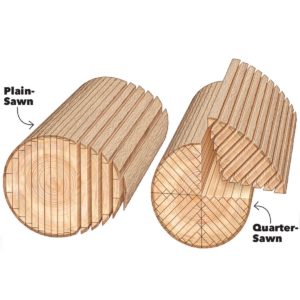
Plain-Sawn vs. Quarter-Sawn: What’s the Difference?
Plain-sawn lumber is the most common cut. The log is sliced straight across, creating wide, cathedral-style grain patterns. Furniture builders and Cabinetmakers use plain-sawn lumber like oak, maple, and cherry — to build furniture. It’s efficient and economical, but it’s also a little more likely to warp or cup over time. Quarter-sawn, on the other hand, takes more time and produces less yield from each log. However, the payoff is worth it. These boards resist warping, splitting, and shrinkage. They stay flat and true, even in changing humidity.
In short:
- Plain-sawn = faster, cheaper, but less stable.
- Quarter-sawn = slower, pricier, but stronger and more beautiful.
What Are The Benefits of Quarter-Sawn Furniture?
- Superior Stability: Quarter-sawn lumber expands and contracts less than plain-sawn wood. Your furniture keeps its shape for decades.
- Distinctive Grain: Each board reveals a fine, straight grain and shimmering medullary rays. This pattern gives furniture a timeless, upscale look.
- Long-Term Durability: Because quarter-sawn boards resist warping and splitting, they make ideal materials for table tops, cabinet doors, and mission-style furniture.
- Heirloom Quality: Furniture made from quarter-sawn wood doesn’t just last—it improves with age. Its tight grain and stability make it a favorite for fine, handcrafted pieces.
What Woods are Commonly Quarter-Sawn?
While many hardwoods can be quarter-sawn, the technique is most common in:
- Oak: known for its beautiful ray fleck pattern.
- Maple: light color and smooth, subtle grain.
- Cherry: deepens in color with age, creating rich contrast.
At Weaver Furniture Sales, we offer quarter-sawn options across a wide range of Amish-crafted furniture, with oak being the most sought-after species.
What does “Quarter-Sawn” mean?
It means the log is cut into four quarters before boards are sliced. The grain runs mostly perpendicular to the surface, creating greater strength and a straight, elegant grain pattern. Then, boards are cut in equal widths running from the center of the log toward the bark. As a result, the annual rings intersect each board between a 60 and 90-degree angle. This cut results in more waste. So quarter-sawn lumber is more expensive than plain-sawn lumber.
How does quarter-sawn wood differ from plain-sawn wood?
Plain-sawn is faster and cheaper to cut but less stable. Quarter-sawn is more costly, yet it offers superior strength, consistent grain, and lasting beauty.
Why should I choose quarter-sawn lumber for furniture?
The special nature of the quarter-sawn cut gives the lumber some distinct advantages. Quarter-sawn lumber resists warping, shrinking, and splitting. It’s ideal for pieces that need to remain stable—like dining tables, cabinets, dressers, and desks. In addition, quarter-sawn wood expands and contracts less than plain-sawn wood. Because of its strength and stability, furniture builders and cabinetmakers use quarter-sawn wood for items of fine furniture. Also, you’ll find quarter-sawn wood in the neck and fretboards of expensive string instruments.
In addition, quarter-sawn wood has a straighter, more even grain pattern than plain-sawn wood. This is because the lumber shows the side view of the annual rings. Also, quarter-sawn lumber reveals the wood’s ray cells which display a wavy, ribbon-like pattern called ray fleck. This is why cabinetmakers use quarter-sawn wood for decorative paneling and fine furniture.
Is quarter-sawn furniture worth the extra cost?
Yes. It lasts longer, holds its shape better, and displays a richer grain pattern. For anyone who values heirloom quality, quarter-sawn is a smart investment.
Amish Furniture Built with Quarter-Sawn Wood
At Weaver Furniture Sales, we partner with skilled Amish craftsmen who understand wood from the inside out. Every table, chair, and cabinet we sell is built to highlight the natural strength and beauty of the wood. When you choose quarter-sawn furniture, you’re investing in craftsmanship that stands the test of time. Visit our Shipshewana furniture showroom or browse our online collection Amish furniture to see the difference quarter-sawn lumber makes.